
Search for something particular...
Type in what you are looking for below...
Flexible Ferrite Magnets
FAQs
What is an Oersted?

What is an Oersted?
An Oersted (Oe) is a unit of magnetic field strength (H). It measures the intensity of an applied magnetic field used to magnetise or demagnetise a material. Oersteds are commonly used when discussing the magnetic properties of permanent magnets such as neodymium, samarium cobalt, Alnico, and flexible ferrite magnets.
Why is Oersted important in magnets?
Oersted values are closely linked to a magnet’s coercivity, the resistance of a magnet to demagnetisation. The higher the Oersted rating, the stronger the opposing magnetic field required to demagnetise the material. This makes it a key specification when selecting magnets for demanding applications.
How are the magnetic poles of a magnet determined?
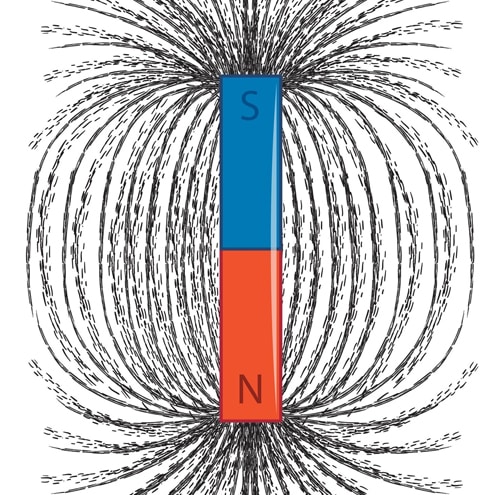
The magnetic poles of a magnet are determined based on its magnetic field lines. These invisible lines form loops from the north pole to the south pole, both inside and outside the magnet. When suspended freely, a magnet will align itself along the north-south direction, with its north pole pointing towards the Earth's geographic north and its south pole towards the geographic south.
What does coercivity (Hc) mean in Oersteds?
Coercivity, measured in Oersteds, indicates how much reverse magnetic field strength is needed to reduce a magnet’s magnetisation to zero. For high-performance magnets like neodymium and samarium cobalt, high coercivity ensures stability in environments where strong external magnetic fields or elevated temperatures are present.
How do Oersteds relate to magnet strength?
Oersteds measure magnetic field strength (H), not pulling force directly. However, they are an important part of a magnet’s demagnetisation curve and help engineers understand how the magnet will behave under load, in assemblies, or in varying temperature conditions.
Are Oersteds the same as Gauss?
No. Oersteds measure magnetic field strength (H), while Gauss measures magnetic flux density (B). Both are important when evaluating magnets. Oersteds relate to resistance to demagnetisation, whereas Gauss typically describes surface field strength.
Why does Oersted matter when selecting neodymium or other permanent magnets?
Different magnet materials have different coercivity levels. Neodymium magnets often offer very high coercivity, making them suitable for compact, high-performance applications. Ferrite magnets typically have lower energy products but good resistance to demagnetisation at a lower cost. Understanding Oersted values ensures the correct magnet is chosen for long-term reliability and performance.
Got any questions? Speak to us
Get in touch with our experienced team – we can work with you to create bespoke, complex and practical solutions that work
ADDRESS:
1, Allée des trois Jeannettes, 16200, Jarnac, France
EMAIL:
PHONE NUMBERS:
+33 (0)5 45 83 99 59
+33 (0)6 21 96 41 12